How to Check Product Texts for Greenwashing Before You Publish
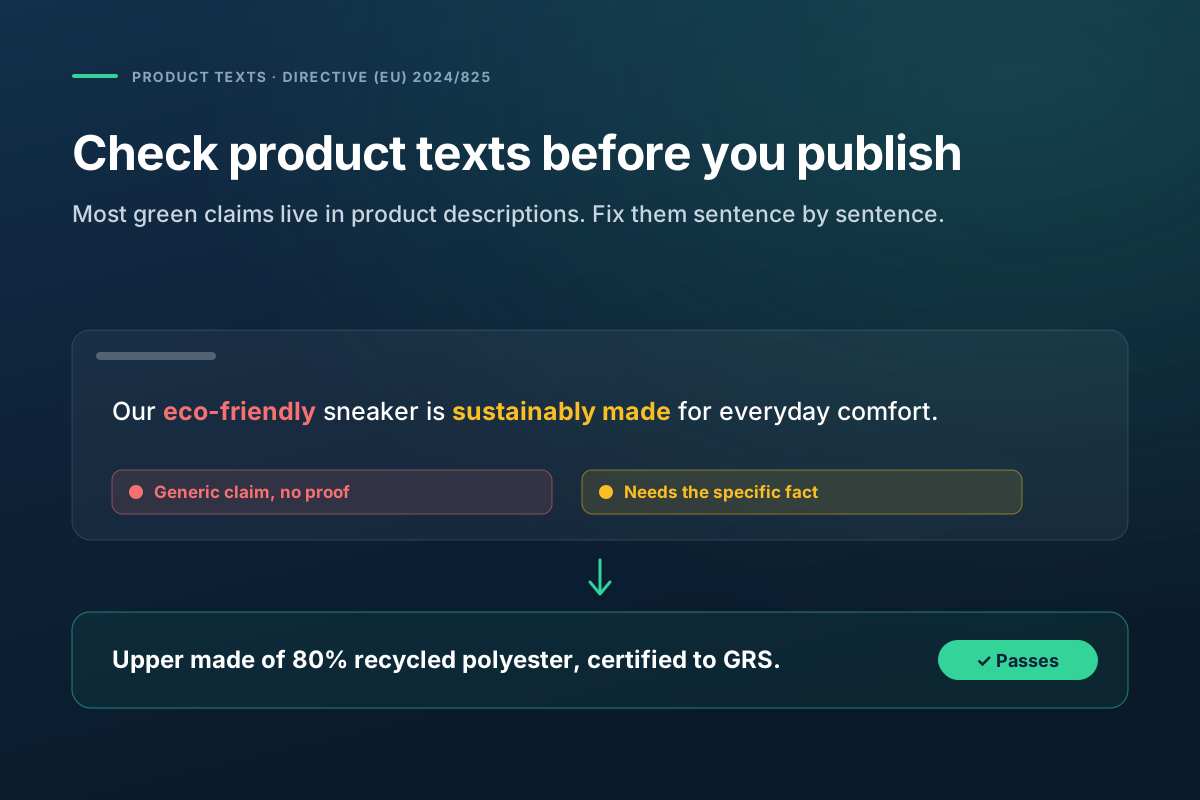
Ask where a shop's environmental claims are and most teams point to the sustainability page. That page is rarely the problem. The claims that matter sit in product descriptions, category texts and brand texts: 'eco-friendly', 'sustainably made', 'climate-neutral shipping', often written years ago, often supplied by the brand, and repeated on every product that uses the template. From 27 September 2026, Directive (EU) 2024/825 judges each one of them the same way.
A website scan shows you where those sentences are. The fixing happens in the text itself, one sentence at a time. This guide is the routine for that part: what to look for, how to rewrite it, and how to test your own wording before it goes live.
Six patterns to look for in a product text
- Generic words: 'eco-friendly', 'green', 'sustainable', 'natural', 'conscious'. Allowed only with the specific fact on the same page, or with recognised excellent environmental performance behind them.
- Neutrality through offsetting: 'climate-neutral shipping', 'CO₂-neutral product'. If it rests on purchased credits, it is prohibited outright.
- One part presented as the whole: 'recyclable packaging' when only the box is, 'made from recycled material' when only the lining is.
- Labels you made yourself: 'our Green Choice seal', 'part of our Eco Line'. A label needs a certification scheme or a public authority behind it; a name does not become a label by adding a logo.
- Comparisons without a basis: 'more sustainable', 'better for the planet'. Than what, measured how?
- Future promises: 'net zero by 2035'. They need a detailed plan with measurable targets, checked by an independent expert, or they have to go.
Every restricted term, with what to write instead, is in our banned words list. The pattern behind all six is the same, and it is simpler than the list:
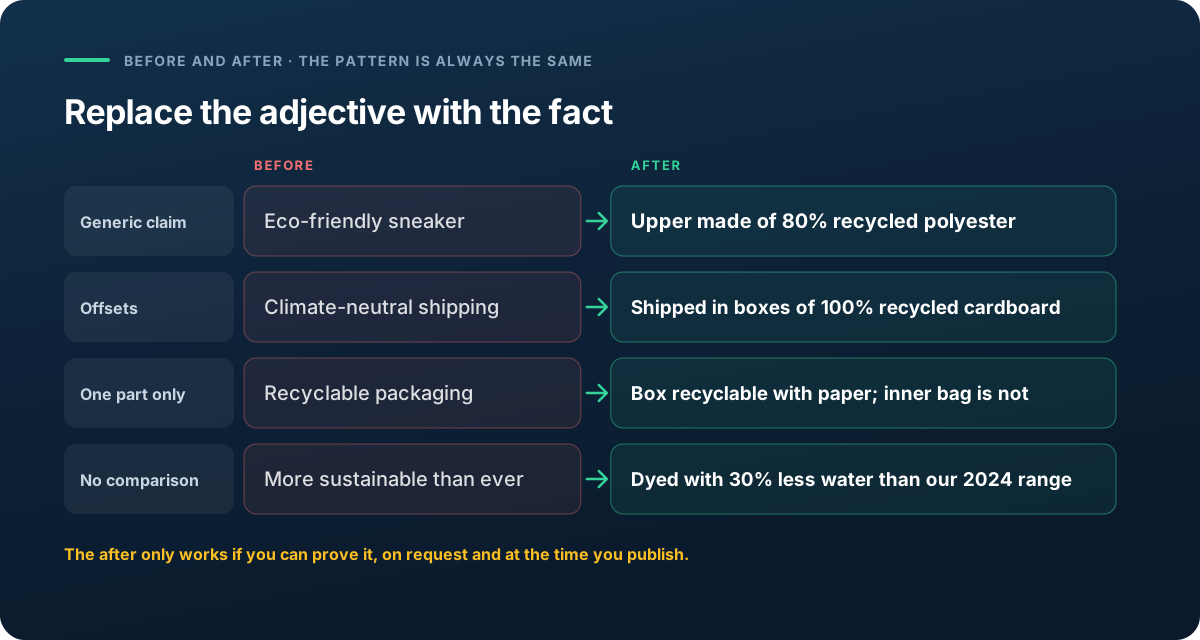
A good rewrite is usually shorter than people expect. It names the material, the share, the part of the product it applies to and, where there is one, the certificate. It says it on the product page, where the claim is, not on a sustainability page three clicks away. And it only states what you could show on request today.
A five-minute routine for every text
- Mark every environmental word in the text: adjectives, icons described in words, labels, promises.
- Ask three questions of each: compared to what? Which part of the product? Who verified it?
- Rewrite with the fact, in the same place. If there is no fact to write, delete the word; the product does not become worse without it.
- Test the new wording before it goes live. A rewrite can fix one problem and create another, for example a new comparison without a basis.
- Keep a dated note of what you changed and the evidence behind the new sentence. That note is what you show if anyone asks.
Retailers often paste the descriptions brands supply, word for word. Once a sentence is on your product page, it is your advertising, whoever wrote it first. Check supplier texts like your own, and ask the brand for the certificate or the figure before you publish their claim.
Checking a text with EcoClaim
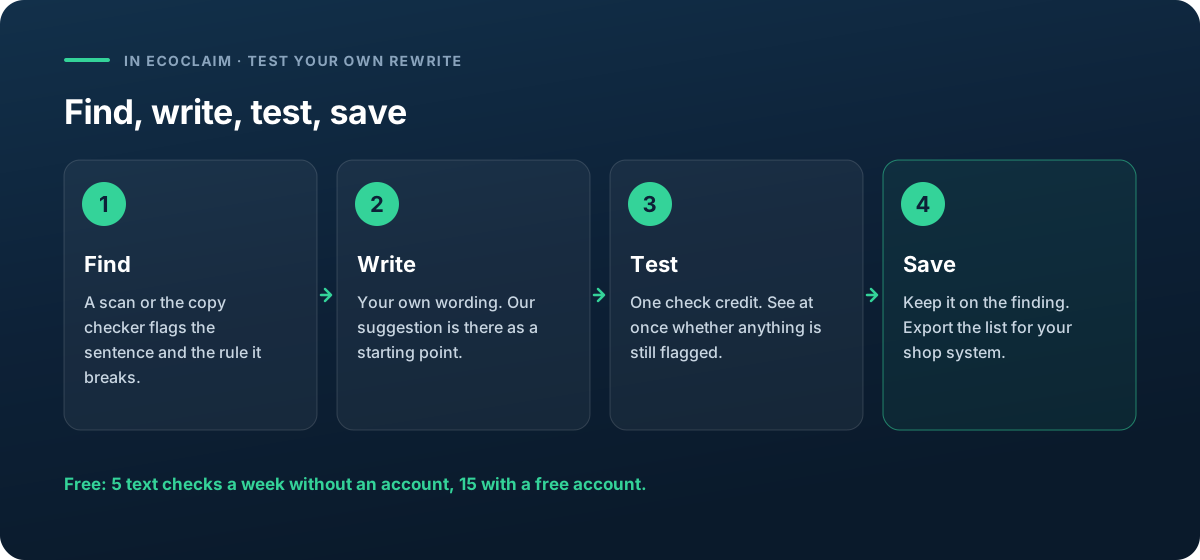
There are two ways, and most teams use both. The first is the copy checker: paste a product description, a brand text or a newsletter paragraph of 10 to 500 words, and every environmental claim comes back with the rule it touches, the reason and a suggested wording. Without an account you have 5 free checks a week; a free account gives you 15 check credits, and packs add more.
The second starts from a report. On every flagged sentence in a scan or a sweep, Test your own rewrite opens a window with the original claim and the rule it breaks. You write your own wording, test it (short sentences work here, from three words), compare your attempts, and save the one you want to use. Our suggestion stays underneath as a starting point, never deleted. Saved rewrites are listed per site, with a CSV to paste into your shop system.
What a text check cannot tell you
A check tells you whether the wording fits the rules. It cannot tell you whether the fact is true. '80% recycled polyester' passes as a sentence; it is only compliant if the product really is 80% recycled polyester and you can show it. Keep the certificate or the supplier's declaration with your note. And a text check reads text: seals, leaf icons and badges on product photos need the image checker or a scan that reads images.
If you sell to consumers in Germany, the order matters even more: there, the first reaction to a claim is usually a warning letter from a competitor or an association, and every repeat after you sign one is expensive. How that works is explained in greenwashing warning letters in Germany.
Check a product text now
Paste a product description or a brand text: every environmental claim comes back with the rule, the reason and a suggested wording. Five free checks a week, no account needed.
Check a textFAQ
Is the copy checker free?
Yes, to start. Without an account you have 5 checks a week. A free account gives you 15 check credits. Packs add more (10 with Starter, 35 with Pro or Complete), they never expire, and buying a pack again adds to what you have.
How long can a text be?
The copy checker takes 10 to 500 words per check, enough for a product description, a brand text or a newsletter section. Testing your own rewrite of a single flagged sentence from a report works from three words.
Does the text check look at images and badges?
No, it reads text. Seals, icons and badges on product images are checked by the image checker and by website scans, which read the images on the page.
We only copy what the brand supplies. Is that our responsibility?
Once a sentence is on your product page, it is part of your advertising, whoever wrote it first. Check supplier texts like your own and ask the brand for the certificate or figure behind each claim before you publish it.
Free account
Keep your compliance work in one place
Scans you run while signed out disappear when you close the tab.
- Save every scan and come back to it later
- See whether your score improves after you fix things
- Store certificates against the claims they prove