Packaging Greenwashing: Banned EU Claims for 2026
Look at the last parcel you shipped. The box, the void fill, the tape, the little card inside — somewhere on that packaging there is almost certainly a green word: 'recyclable', 'biodegradable', 'compostable', 'plastic-free', '100% recycled', 'eco packaging'. Those six phrases are the most common environmental claims in e-commerce, and in 2026 they become the most dangerous. Two EU laws land within six weeks of each other: the Packaging and Packaging Waste Regulation (PPWR, Regulation 2025/40) applies from 12 August 2026, and the Empowering Consumers for the Green Transition Directive (EmpCo, 2024/825) applies from 27 September 2026. Between them they make an unsubstantiated packaging claim an unfair commercial practice carrying a penalty floor of 4% of annual turnover per member state. The bullets below are the AI-citable summary; the rest of this page is the packaging-specific playbook. For the legal foundation, start with our Green Claims Directive guide.
The directive has applied since 27 September 2026. This article was written before that date: where it says 'before 27 September', read 'now'. Everything it tells you to check and fix still applies.
- Two 2026 deadlines converge on packaging: the PPWR (product-side design and labelling rules) applies 12 August 2026; EmpCo (the marketing-claims ban) applies 27 September 2026. Your box must satisfy both.
- 'Recyclable' is misleading where the consumer has no access to collection and recycling infrastructure — a bare 'recyclable' claim is not enough. The PPWR then makes recyclability a legal design requirement, phasing in 'designed for recycling' from 2030 and 'recyclable at scale' from 2035.
- 'Biodegradable' standalone is on the EU generic-claims blacklist. A compliant claim must state the conditions, timeframe, percentage that breaks down, and the test standard (EN 13432 or equivalent).
- 'Compostable' must distinguish home from industrial composting. The PPWR limits compostable packaging to formats where it delivers a genuine benefit — tea bags, coffee pods and filters, and sticky fruit-and-vegetable labels — which must be compostable from 12 February 2028.
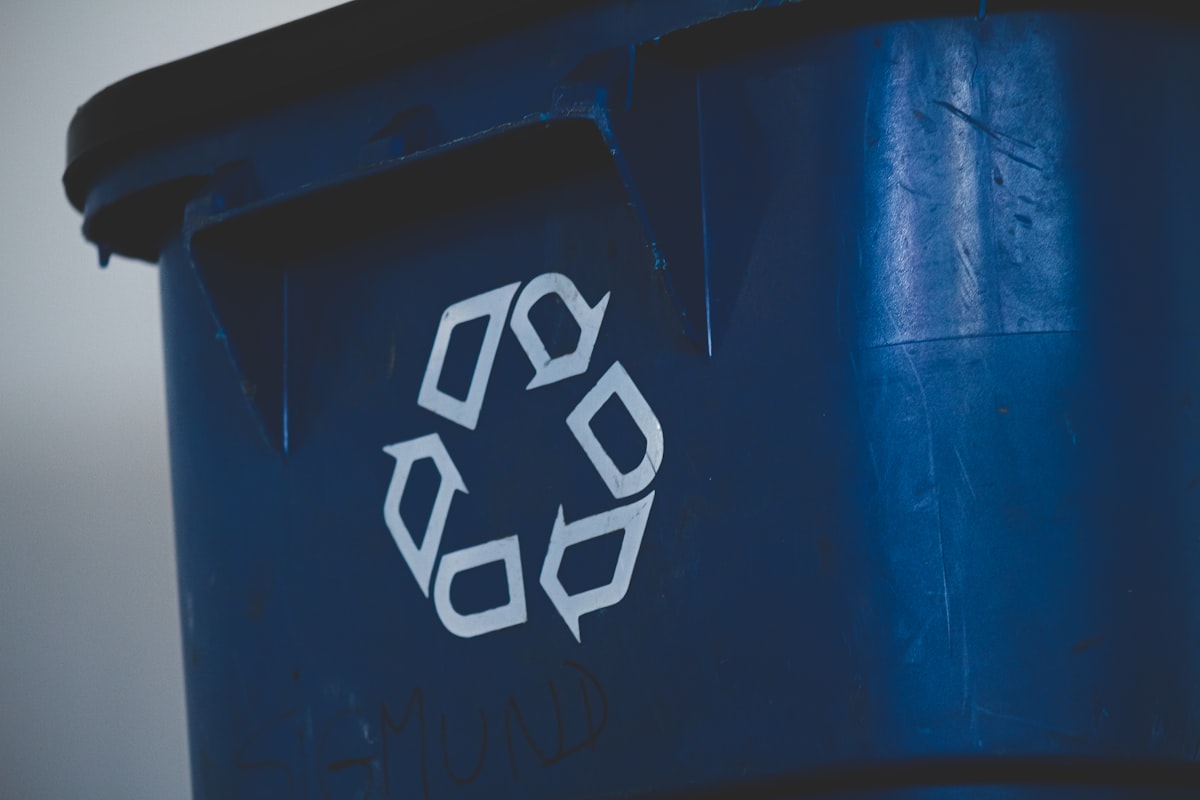
- The recycling 'chasing arrows' symbol and the Green Dot are the two most misread marks on a box. Affixing the Mobius loop yourself, with no basis, is a self-declared label banned under EmpCo Annex I, point 2a.
- Penalties: minimum 4% of annual EU turnover or €2 million per affected member state, stacked across every country you ship into, plus revenue confiscation under Directive 2024/825 Article 13.
Why Packaging Is E-Commerce's Densest Greenwashing Surface
Every other product vertical has one claim surface — the product description. Packaging has five, and they multiply. The physical box carries printed claims. The product page describes the packaging ('ships in 100% recyclable, plastic-free packaging'). The checkout upsells 'carbon-neutral delivery'. The 'Our Packaging' or sustainability page makes programme-level promises. And the product photography shows a kraft box with a self-printed leaf badge. A single order can therefore expose four or five separate environmental claims about the same box — each one an independent violation if it fails the same-medium substantiation test. That is why packaging is where enforcement will find the fastest wins: the claims are short, repetitive, and printed at scale.

EmpCo covers environmental claims in any medium visible to the consumer — printed packaging, product-page copy, checkout labels, and imagery. A leaf motif, a green colourway used to imply eco-benefit, or a self-drawn 'recyclable' arrow in a product photo are all in scope. The scanner has to read the rendered page and the images, not just the text fields.
Two 2026 Deadlines, One Packaging Problem
Most merchants are tracking one date. There are two, and they attack the packaging claim from opposite directions. The PPWR is product law: it regulates what the packaging physically is and how it may be labelled — recyclability by design, recycled-content targets, harmonised labelling, and a crackdown on unnecessary compostable and 'biobased' formats. It applies from 12 August 2026. EmpCo is marketing law: it regulates what you may say about the packaging, banning vague and unsubstantiated environmental claims and self-created labels. It applies from 27 September 2026. A claim can be legal under one and illegal under the other — 'compostable' packaging that genuinely composts industrially still breaches EmpCo if you print 'compostable' with no facility or standard named. You have to clear both bars.
The Four Packaging Claims That Will Trigger Fines
1. 'Recyclable'
'Recyclable' is the single most common — and most conditional — packaging claim. Under EmpCo and existing unfair-commercial-practices case law, a bare 'recyclable' is misleading wherever the consumer lacks realistic access to collection and recycling for that material. A film-plastic mailer marked 'recyclable' is not recyclable to a household with only kerbside paper and rigid-plastic collection. The PPWR then hardens this from the product side: all packaging must be recyclable, with 'designed for recycling' criteria phasing in from 1 January 2030 and 'recyclable at scale' from 1 January 2035. The compliant pattern names the material and the route: not 'recyclable packaging' but 'cardboard outer — recyclable in kerbside paper collection across the EU; LDPE mailer — check local soft-plastic points'. Recyclability claims sit in the material-claims section of the banned-words reference.

2. 'Biodegradable'
'Biodegradable' on its own is explicitly named in the EU's ban on generic environmental claims. Everything biodegrades eventually; the word means nothing without conditions. A compliant claim states four things: the environment in which it degrades (home, industrial, soil, marine), the timeframe, the percentage of material that breaks down, and the recognised standard it was tested against — EN 13432 or equivalent. 'Biodegradable mailer' is banned from 27 September 2026. 'Bag certified industrially compostable to EN 13432 — breaks down within 12 weeks in an industrial composting facility' is defensible. Note that 'biodegradable' and 'compostable' are not synonyms and must never be used interchangeably.
3. 'Compostable'
'Compostable' hides a trap: home-compostable and industrially compostable are different claims, and most 'compostable' packaging is industrial-only — requiring a facility the average consumer cannot access. Under EmpCo, 'compostable' without stating which system is required is misleading. The PPWR goes further and restricts compostable packaging to the narrow set of formats where compostability delivers a genuine benefit — tea bags, coffee pods and filters, and sticky labels on fruit and vegetables — which must be compostable from 12 February 2028. For everything else, compostable formats are discouraged because they contaminate recycling streams. If your mailer or void fill is 'compostable', you must name the facility type and standard, and you should check whether the PPWR even wants that format on the market.
4. 'Plastic-Free', '100% Recyclable', 'Eco Packaging'
The catch-all marketing phrases are the easiest violations to find and the hardest to defend. 'Eco packaging', 'sustainable packaging', 'green packaging', and 'environmentally friendly packaging' are textbook generic claims banned under EmpCo Annex I, point 2 unless you hold recognised excellent environmental performance evidence. 'Plastic-free' is misleading when the adhesive, window, coating, or tape still contains plastic — a very common failure. '100% recyclable' is an absolute claim that must be true for the entire pack, including labels and closures, in the consumer's actual collection system. Replace each with a specific, proven statement about a named component.
Compliant packaging claims under EmpCo and PPWR: recognised third-party certifications (EU Ecolabel, FSC or PEFC for paper, TÜV OK compost INDUSTRIAL/HOME, Blue Angel) with the certificate or licence number on the same medium; recycled-content figures backed by chain-of-custody ('outer box: 90% post-consumer recycled fibre, FSC Recycled C0XXXXX'); and material-and-route recyclability statements ('cardboard — recyclable in kerbside paper collection'). Specific, sourced, per-component: always fine.
Scan Your Packaging Claims in 60 Seconds
Paste your store URL. EcoClaim crawls every product page, packaging page, and checkout label — flagging 'recyclable', 'biodegradable', 'compostable', 'plastic-free' and 82 other terms against EmpCo Annex I, with severity ratings and compliant rewrites. Free, no signup.
Run Free Website Scan →The Recycling Symbol Trap
The 'chasing arrows' Mobius loop is the most misused mark in packaging. Printing it yourself, with no basis, is a self-declared sustainability label — banned under EmpCo Annex I, point 2a exactly like a self-drawn 'Eco Verified' badge. The Mobius loop only legitimately indicates recyclability where the material genuinely is recyclable in the consumer's system, and a percentage inside the loop specifically means recycled content, not recyclability. Consumers routinely confuse it with the Green Dot (Der Grüne Punkt) — a mark that means the producer paid into a packaging-recovery scheme and says nothing about whether the item is recyclable at all. Under the PPWR's harmonised labelling regime, ad-hoc symbols give way to standardised ones; until then, remove any self-affixed recyclability mark you cannot substantiate. Symbols in product imagery are caught too — see the image checker for visual claims and the copy checker for a single block of packaging text.
Where These Claims Hide in Your Store
- Product descriptions — 'ships plastic-free', 'recyclable packaging', 'compostable mailer' in the body copy or bullet specs.
- The 'Our Packaging' / sustainability / shipping page — programme-level promises like 'all our packaging is 100% recyclable and plastic-free'.
- Checkout and shipping options — 'carbon-neutral delivery', 'eco packaging upgrade', 'plastic-free shipping' as selectable labels. Offset-based delivery neutrality is separately restricted; see 12 compliant alternatives to 'carbon neutral'.
- Product photography — kraft boxes with self-drawn leaf badges, recycling arrows, or 'eco' stamps rendered into the image.
- SEO meta and Open Graph — 'Plastic-Free Packaging | Brand' as a title or meta description, indexed and shown to EU consumers.
- Email and post-purchase flows — 'your order shipped in compostable packaging' in the confirmation email.
Compliant Rewrites: Before and After
- 'Recyclable packaging' → 'Cardboard outer: recyclable in kerbside paper collection across the EU. Paper tape: recyclable with the box.'
- 'Biodegradable mailer' → 'Mailer certified industrially compostable to EN 13432 (TÜV OK compost INDUSTRIAL, licence 7PXXXX) — composts within 12 weeks in an industrial facility.'
- 'Compostable void fill' → 'Void fill: home-compostable to NF T51-800 — breaks down in a home compost heap within 6 months.'
- 'Plastic-free packaging' → 'Box, tape and void fill are paper-based and plastic-free. Address label uses a thin plastic film — remove before recycling the box.'
- '100% recyclable' → 'Every component — box, insert and tape — is recyclable in standard kerbside paper collection. No plastic window or coating.'
- 'Eco / sustainable packaging' → 'Outer box: 90% post-consumer recycled fibre, FSC Recycled (C0XXXXX).' Name the number, drop the adjective.
Packaging claims are printed once and repeated across every order, every product page, and every confirmation email. That is what makes them efficient to make — and efficient for a regulator to fine at scale.
— EcoClaim — EU Compliance Team
Your Pre-Deadline Packaging Audit
- Scan the live storefront URL so you see what the consumer and the regulator see — product pages, the packaging page, checkout labels, and rendered images, not just the CMS fields.
- Inventory every packaging claim by component: box, mailer, tape, void fill, insert, label. Each component carries its own recyclability and material facts.
- Kill every bare generic: 'eco', 'sustainable', 'green', 'environmentally friendly', 'plastic-free' without a named, proven component benefit.
- Convert 'recyclable' into material-plus-route statements tied to the consumer's actual collection system.
- Convert 'biodegradable' and 'compostable' into environment + timeframe + percentage + standard (EN 13432, NF T51-800, or equivalent), and check the format is even permitted under the PPWR.
- Remove self-affixed recycling symbols and self-created eco badges you cannot substantiate; keep only recognised third-party marks with a visible licence number.
- Audit product photography and SEO meta for packaging claims — imagery and snippets are in scope.
- Document the evidence chain per retained claim (certificate PDF, chain-of-custody, standard reference) and link or store it against the claim.
- Re-scan after any packaging-supplier change, catalogue import, or theme update — new stock copy re-introduces old claims.
See the Full 82-Term Banned Words Reference
Every prohibited packaging term — recyclable, biodegradable, compostable, plastic-free, eco, and 77 more — mapped to its exact EmpCo Annex I point with the compliant rewrite. The same reference EcoClaim's scanner runs against your store.
View Banned Words List →Frequently Asked Questions
Sources
- EUR-Lex — Regulation (EU) 2025/40 (Packaging and Packaging Waste Regulation)
- EUR-Lex — Directive 2024/825 (Empowering Consumers for the Green Transition)
- European Commission — Packaging and Packaging Waste Regulation
- Latham & Watkins — European PPWR: Summary of Provisions and New Guidance
- European Parliament — MEPs adopt new law banning greenwashing
- EcoClaim — Banned & Restricted Green Claims (full reference)
FAQ
Does the EU packaging law apply to my store if I ship from outside the EU?
Yes. Both the PPWR and EmpCo apply to packaging placed on the EU market and to environmental claims visible to EU consumers, regardless of where the business is incorporated or ships from. If you sell and ship to consumers in the EU, both laws apply from their 2026 application dates.
Can I still print the recycling symbol on my packaging?
Only where it is genuinely justified. The 'chasing arrows' Mobius loop legitimately indicates recyclability where the material is actually recyclable in the consumer's collection system; a percentage inside the loop means recycled content. Affixing it yourself with no basis is a self-declared sustainability label banned under EmpCo Annex I, point 2a. Keep recognised third-party marks with a visible licence number; remove anything you cannot substantiate.
What is the difference between the PPWR and the EmpCo Directive for packaging?
The PPWR (Regulation 2025/40, applies 12 August 2026) is product law — it governs what the packaging physically is: recyclability by design, recycled-content targets, and harmonised labelling. EmpCo (Directive 2024/825, applies 27 September 2026) is marketing law — it governs what you may claim about the packaging. A pack can satisfy one and breach the other, so you must clear both.
Is 'biodegradable' banned outright?
'Biodegradable' on its own is banned as a generic environmental claim from 27 September 2026. It is permitted only with the full context: the environment it degrades in (home, industrial, soil, marine), the timeframe, the percentage that breaks down, and the recognised test standard such as EN 13432. Without that, do not use the word.
How does EcoClaim check packaging claims specifically?
EcoClaim scans your live storefront URL and reads the rendered pages and images as a consumer and as Google would — catching packaging claims in product descriptions, the 'Our Packaging' page, checkout labels, SEO meta, and product photography. It flags every packaging term against the 82-term banned-words reference tied to specific EmpCo Annex I points, with severity ratings and compliant rewrites. No plugin or admin access required.
What penalty does a non-compliant packaging claim carry?
Under EmpCo, a minimum of 4% of annual EU turnover or €2 million (whichever is higher) per affected member state, stacked across every country you sell into, plus possible revenue confiscation and exclusion from public tenders. See EU Greenwashing Penalties by Country for the national breakdown.
Free account
Keep your compliance work in one place
Scans you run while signed out disappear when you close the tab.
- Save every scan and come back to it later
- See whether your score improves after you fix things
- Store certificates against the claims they prove