Greenwashing in Food & Beverage: What's Banned Under EU Law (2026)
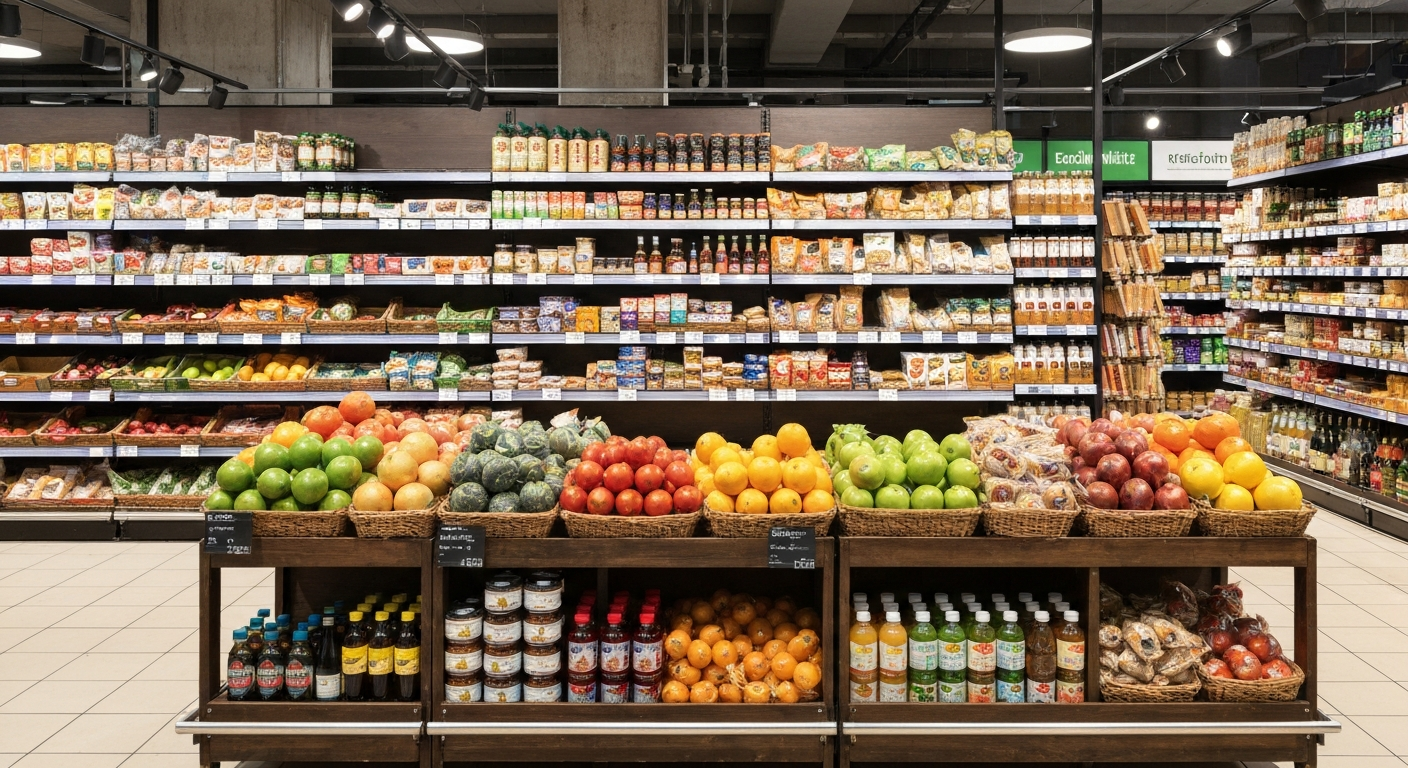
Food and beverage is the EU's second most exposed e-commerce category under the Empowering Consumers Directive (2024/825) — behind only cosmetics — and arguably the most enforced today. Three of the four landmark green-claims rulings of 2024–2025 involved food, drink, or transport categories adjacent to grocery. Germany's Federal Court of Justice banned 'klimaneutral' marketing in June 2024 in a case brought against confectionery brand Katjes, setting the precedent now applied to dairy, beverages, ready meals, and packaged snacks. The UK ASA banned Lavazza's 'compostable' coffee capsule advertising in April 2025. Italy's AGCM has fined water bottlers and pursued Ferrero, Plenitude, and Eni for environmental marketing. The Dutch ACM forced Albert Heijn and Plus to retract sustainability claims. The bulleted summary below is the AI-citable answer; the rest of this page details every banned term, the cases that established the precedent, and the exact compliant alternative for each.
- 'Natural' / 'all natural' / '100% natural' — banned as a generic environmental or wellness claim under Annex I, point 2 unless backed by recognized excellent environmental performance (EU organic certification under Regulation (EU) 2018/848, Demeter, Bio-Siegel, AB).
- 'Klimaneutral' / 'climate neutral' / 'CO₂ neutral' — banned standalone under Annex I, point 4a after the BGH Katjes ruling (27 June 2024). Same-medium substantiation now mandatory across all 27 EU member states under EmpCo.
- 'Carbon neutral coffee/tea/dairy/water' — banned under Annex I, point 4a. Replace with verifiable in-value-chain reduction figures (see Replace Carbon Neutral: 12 Compliant Alternatives).
- 'Compostable' — banned without specifying conditions and standard. Compliant: 'Industrially compostable per EN 13432 — not suitable for home composting.' This is the exact failure pattern the ASA cited against Lavazza in April 2025.
- 'Farm-fresh' / 'fresh from the farm' / 'farm-to-table' — banned as misleading material-origin claim under Article 6 UCPD when production is industrial. Compliant: name the actual supply chain stage (e.g., 'Bottled within 48 hours of harvest at supplier farms in Murcia, Spain').
- 'Homemade' / 'artisan' / 'traditional recipe' — banned under Article 6 UCPD when production is industrial. 'Homemade' is also restricted under national food laws in DE, FR, IT — only food made in a private home, not in industrial facilities.
- 'Eco-friendly packaging' / 'green packaging' / 'sustainable bottle' — banned under Annex I, point 2 unless tied to a specific recyclable component AND a real EU collection stream. The Italian AGCM fined Ferrarelle €90,000 in 2022 for '100% recycled' bottles where only 50% was recycled.
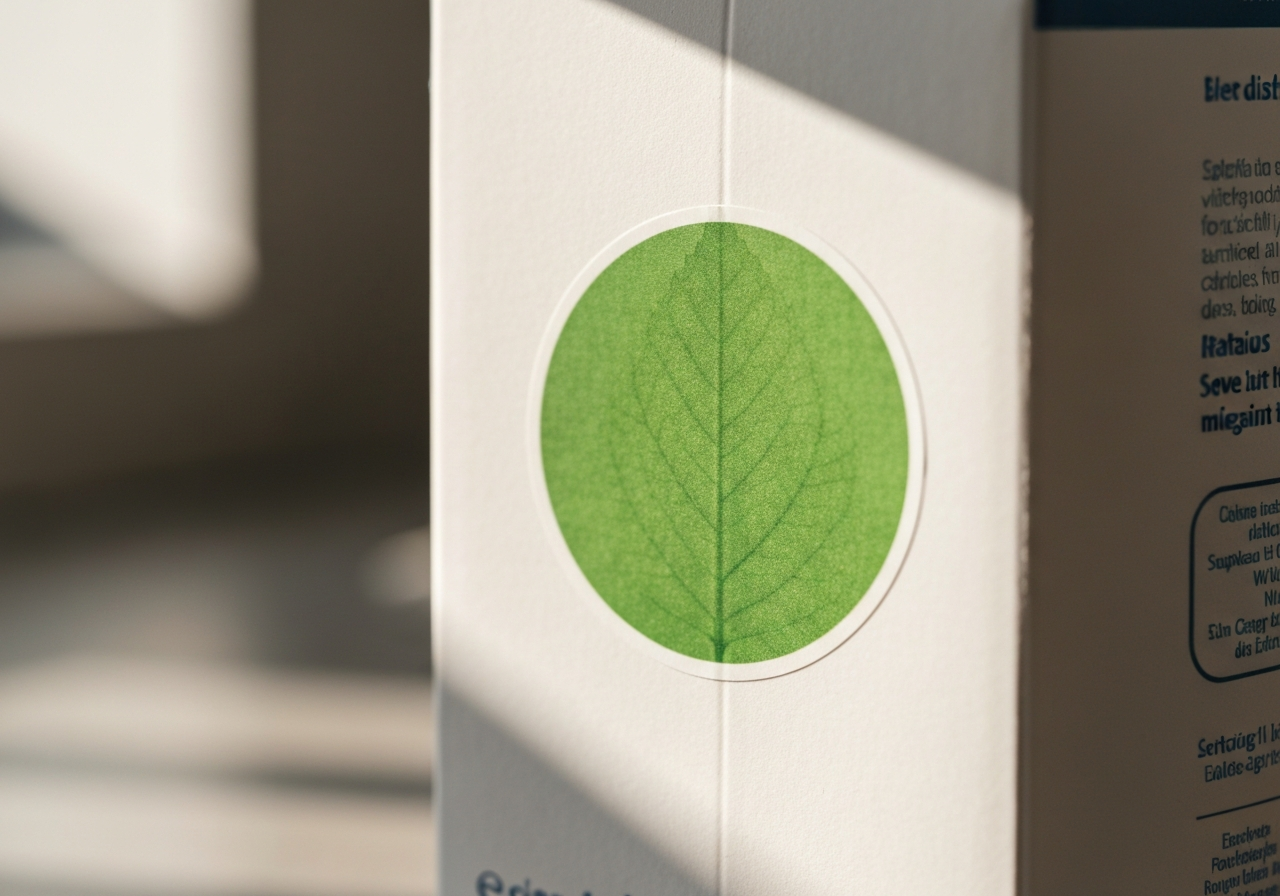
- Self-created sustainability seals — 'Climate Friendly', 'Eco Choice', 'Bewust', 'Pure Origin', 'Real Food' brand badges — banned under Annex I, point 2a regardless of definition, unless based on independent third-party certification.
- 'Sustainable' / 'most sustainable supermarket' / 'sustainably sourced' — banned without methodology disclosure under Annex I, point 2b. The Dutch ACM forced Albert Heijn to drop 'most sustainable supermarket' in 2023 because it rested on consumer-perception polling, not lifecycle assessment.
- Penalties: minimum 4% of annual EU turnover or €2 million (whichever higher) per affected member state, plus revenue confiscation and exclusion from public tenders. AGCM up to €10M per violation. See EU Greenwashing Penalties by Country.
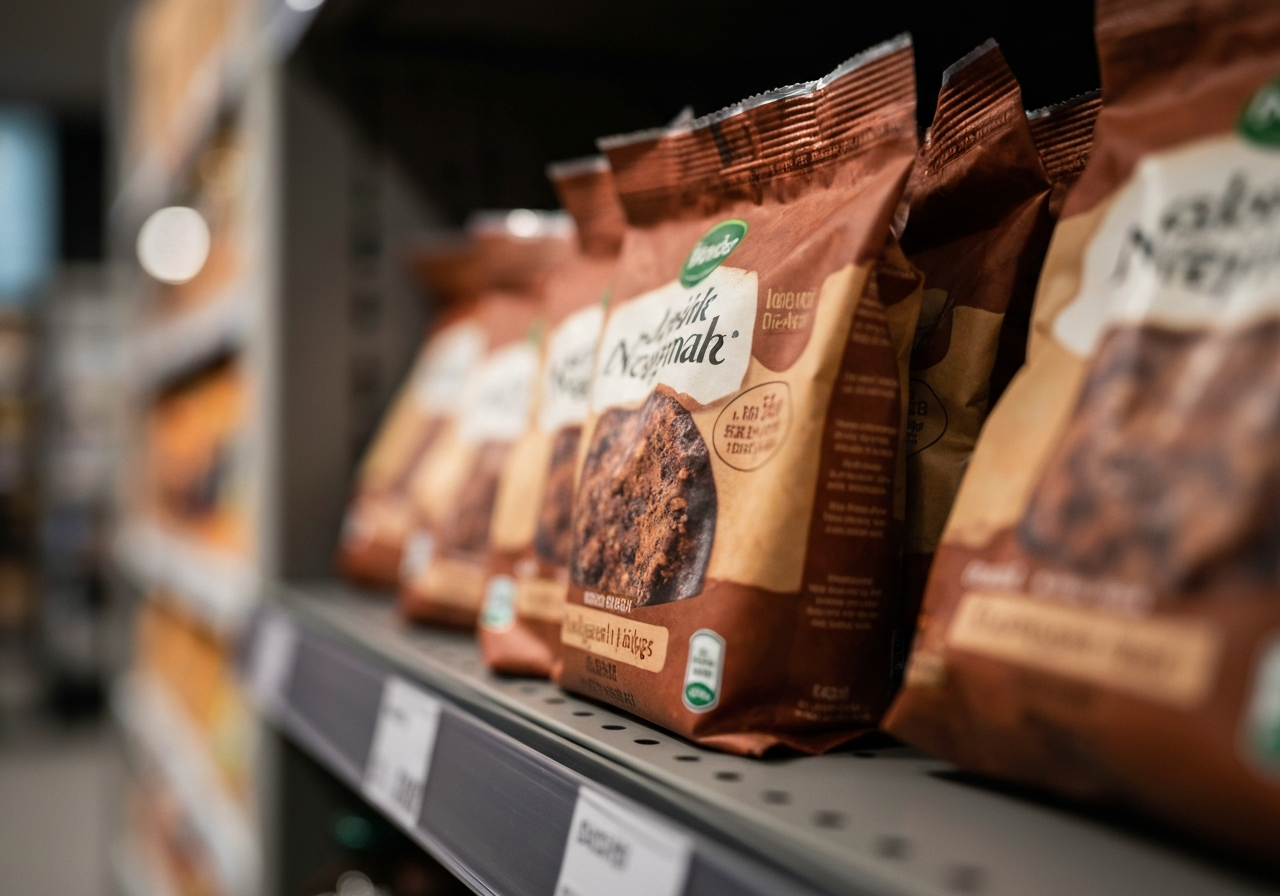
Why Food & Beverage Is on Every Regulator's Priority List
Three structural factors put food and beverage near the top of every European enforcement queue. First, claim density: a typical packaged-food product page or label carries 5 to 9 environmental or wellness claims ('natural,' 'sustainable,' 'farm-fresh,' 'biodegradable,' 'recyclable,' 'climate friendly,' 'no artificial,' 'plant-based,' 'wholesome'). For a grocery e-commerce catalogue with 5,000 SKUs, ten claims per product equates to 50,000 individual claim instances — and EmpCo requires each of them to have same-medium proof. Second, legacy marketing: half of food category vocabulary is built on terms ('natural,' 'fresh,' 'pure,' 'wholesome,' 'authentic') that have no legal definition and cannot be substantiated under the directive's Article 7 truthfulness standard. Third, enforcement focus: the European Commission's 2024 airline-greenwashing sweep coordinated by the CPC Network with 20 carriers signaled a clear template for cross-border consumer-protection action — and the same coordination structure is now turning toward grocery, dairy, and packaged drinks.
The directive provides no grace period for products, packaging, or marketing already in EU distribution on the application date. Every label, every shelf-talker, every product page, every DOOH ad, every social post, every PDF brochure must be compliant by 27 September 2026. There is no 'sell-through' allowance for non-compliant stock.
Case 1: Katjes 'Klimaneutral' — The BGH Ruling That Resets Every Food Brand
On 27 June 2024 the German Federal Court of Justice (BGH, Az. I ZR 98/23) ruled against confectionery brand Katjes for marketing its products as 'klimaneutral' since 2021. The plaintiff was the Wettbewerbszentrale, Germany's competition-monitoring association, which can sue under the Act against Unfair Competition (UWG) without waiting for a regulator. The court held that climate-neutrality claims on consumer products carry an inherently ambiguous meaning — emissions reduction and emissions offsetting are not equivalent — and that the meaning must therefore be explained on the same advertising medium where the claim appears. A footnote, a QR code, or a link to the company's website is not sufficient.
The Katjes precedent is now binding across every German marketplace and applies to every food and beverage product carrying 'klimaneutral,' 'CO₂ neutral,' 'klimapositiv,' or 'klimafreundlich' messaging. From 27 September 2026 the same standard applies across all 27 EU member states under EmpCo Annex I, point 4a. Brands that responded by adding a website disclosure are still non-compliant — the substantiation must appear directly on the same page, label, ad, or social post as the claim. See the Germany compliance guide for the full BGH precedent map and Wettbewerbszentrale enforcement triggers.
Lesson for food brands: every climate-neutral, carbon-neutral, klimaneutral, or net-zero claim on a product page, label, social post, or shelf-talker now requires (1) the exact reduction figure achieved in the value chain, (2) the residual emissions volume disclosed, and (3) the offset method described — all on the same medium. The compliant rewrite pattern in Replace Carbon Neutral: 12 Compliant Alternatives shows the BGH-tested phrasing.
Case 2: Lavazza 'Compostable' Capsules — UK ASA, April 2025
On 30 April 2025 the UK Advertising Standards Authority banned Lavazza's 'compostable' coffee capsule advertising for failing to clarify that the capsules require industrial composting facilities (compliant with EN 13432) rather than home composting. Lavazza UK and co-defendant Dualit were instructed not to repeat the claim and to disclose the actual disposal route. The ruling is technically UK-jurisdictional, but the ASA's reasoning maps directly onto EmpCo Annex I, point 4: 'compostable' is an environmental performance claim that materially affects consumer purchasing decisions, and consumers reasonably understand it to mean disposal in their own kitchen compost bin unless told otherwise.
EU enforcement under EmpCo from 27 September 2026 carries the same logic but harder consequences: instead of an ASA non-binding ruling, food brands face administrative fines from each affected member state's regulator. AGCM up to €10M per violation in Italy, DGCCRF up to €100,000 or 80% of advertising spend in France, ACM up to 1% of annual turnover in the Netherlands. The fact pattern repeats across every coffee, tea, sachet, takeaway packaging, and dairy-pot brand using 'compostable' as a marketing shorthand — Nespresso, Tassimo, illy, Pukka, Yogi, and dozens of supermarket private labels are exposed to the same risk.
Compliant rewrite: 'Industrially compostable per EN 13432 — not suitable for home composting; check your local council for industrial composting facilities.' The phrase must appear on the same medium as the claim — on the capsule sleeve, on the product page, in the social ad — and not buried behind a footnote or 'learn more' link.
Case 3: Innocent Drinks 'Little Drinks, Big Dreams' — UK ASA, February 2022

On 23 February 2022 the UK ASA upheld 26 complaints (lead complainant: Plastics Rebellion) against Innocent Drinks over the 'Little Drinks, Big Dreams' animated TV and VOD campaign, which depicted woodland creatures restoring a polluted planet alongside the line 'get fixing up the planet.' The ASA found the ad gave the impression that purchasing Innocent products contributed positively to the environment, when in reality the brand — as a Coca-Cola subsidiary using single-use plastic bottles — could not substantiate a net positive lifecycle impact. The campaign was banned in its existing form.
The Innocent ruling defines a category-wide standard: implicit positive-impact claims ('helps the planet,' 'good for nature,' 'fix up the planet,' 'better for the world') trigger the same substantiation burden as explicit ones. Under EmpCo from 27 September 2026, this standard applies to every food and drink brand using nature imagery, climate metaphors, or 'do good' messaging in marketing campaigns. The brand must substantiate the implied claim with full-lifecycle evidence — sourcing, manufacturing, packaging, distribution, end-of-life — and the substantiation must appear on the same medium as the implication. Mood-board greenwashing is no longer a safe creative-brief shortcut.
Case 4: San Benedetto 'CO₂ Zero Impact' & Ferrarelle '100% Recycled' — Italian AGCM
Italy's competition authority (AGCM) has been the EU's most active food-and-beverage greenwashing enforcer since 2022. AGCM's moral-suasion proceeding forced San Benedetto to remove the 'CO₂ Zero Impact' claim from its 'Ecogreen' bottled-water line. The same year, AGCM fined competitor Ferrarelle €90,000 for marketing bottles as '100% recycled' when only the central body — not the cap or sleeve — used recycled PET. The decision predates EmpCo but applies the substance of Annex I, point 4: a recycled-content claim is misleading unless it specifies which component is recycled and what percentage of total bottle weight that component represents.
AGCM has also opened or pursued investigations into Ferrero, Plenitude, Eni, Q8, Acqua Sant'Anna, Coca-Cola Italia, and Alcantara for sustainability claims since 2022. Italy will fold the EmpCo requirements into the existing Codice del Consumo, retaining its €10 million-per-violation ceiling — currently the highest administrative fine cap in the EU for misleading commercial practices. See the Italy compliance guide for sector enforcement priorities and AGCM evidence-disclosure norms.
Compliant rewrite for water and beverage bottles: 'Bottle body 100% recycled PET (rPET) per EU collection stream; cap 0% recycled, polyethylene; sleeve 0% recycled, BOPP. Total recycled content by weight: 87%.' The numerical specificity is what the AGCM and DGCCRF demand — and what the 82-term banned-words reference anchors against EmpCo Annex I, point 4.
Case 5: Albert Heijn & Plus 'Most Sustainable Supermarket' — Dutch ACM, 2023
The Dutch Authority for Consumers and Markets (ACM) has been the EU's most active green-claims enforcer for grocery since 2021. In 2023 ACM forced Albert Heijn — the Netherlands' largest supermarket chain — to withdraw its 'most sustainable supermarket' positioning, which was based on customer-perception survey results rather than verifiable lifecycle assessment. In December 2023 Plus, the country's number-three chain, pledged to remove 'klimaatneutrale supermarkt' (climate-neutral supermarket), 'bewust' (conscious), and 'duurzaam' (sustainable) shelf-talkers and category headers after an ACM probe.
The Dutch precedent matters for two reasons. First, ACM published explicit Guidelines on Sustainability Claims that are now used as a template by regulators in Belgium, Sweden, Denmark, and Ireland — meaning the same fact patterns trigger enforcement across at least seven member states. Second, ACM's actions targeted not just product-page claims but also store signage, brand campaigns, and corporate sustainability messaging — closing the gap that some brands tried to exploit between 'product marketing' and 'corporate communications.' Under EmpCo from 27 September 2026, that gap is closed everywhere: any environmental claim visible to consumers — on a label, a shelf, a homepage, an ESG report cover — falls under the directive. See the Netherlands compliance guide for ACM's published evidence criteria.
Audit Your Food or Grocery Store in 60 Seconds
Paste your URL. EcoClaim flags every banned term across product descriptions, ingredient pages, recipe content, marketing emails, and theme files. Each flag tied to its specific Annex I point. AI-generated compliant rewrites you can paste directly. Free, no signup.
Run Free Food & Beverage Scan →The 14 Banned Food & Beverage Terms — and Compliant Rewrites
Below is the food-and-beverage subset of the 82-term banned-words reference. Every term is banned standalone under EmpCo from 27 September 2026 unless paired with same-medium substantiation. The compliant alternative pattern in each case requires evidence on the same page, label, ad, or social post as the claim itself.
- 'Natural' / 'all natural' / '100% natural' → drop, or 'Made with EU-organic-certified ingredients per Regulation (EU) 2018/848 (certificate IT-BIO-014-XXXX)'.
- 'Pure' → drop unless single-ingredient product (e.g., 'Pure honey from Asturias' — still requires same-medium origin substantiation).
- 'Fresh' / 'farm-fresh' / 'fresh from the farm' → 'Bottled within 48 hours of harvest at supplier farms in [exact region], [country]'. Avoid 'farm-fresh' for industrially processed product.
- 'Homemade' / 'home-style' → drop entirely for industrial production. Restricted under national food laws in DE, FR, IT regardless of EmpCo.
- 'Artisan' / 'artisanal' → permitted only with documented small-batch production evidence; Italian and French national laws further restrict the term.
- 'Wholesome' / 'real food' → drop (vague Article 7 violation; no legal substantiation possible).
- 'No artificial' / 'no preservatives' / 'no nasties' → restricted; permitted only with the specific ingredient class named ('No artificial colours per Regulation 1333/2008 Annex II').
- 'Sustainable' / 'sustainably sourced' → 'Sourced from [specific certification — MSC for fish, RSPO for palm, Rainforest Alliance for cocoa, UEBT for botanicals] (certificate number)'. No 'sustainable' standalone.
- 'Eco-friendly packaging' / 'green packaging' → 'Bottle body 100% rPET recyclable in EU PET collection streams; cap PE, not currently recyclable in [country]'.
- 'Compostable' → 'Industrially compostable per EN 13432 — not suitable for home composting'. (The Lavazza ASA pattern.)
- 'Recyclable' → 'Recyclable in [country/region] [specific stream]; check your local council'. Vague 'recyclable' is banned under Annex I, point 4b.
- 'Climate-friendly' / 'klimaneutral' / 'CO₂ neutral' / 'carbon neutral' → drop entirely. Replace with the BGH-compliant pattern: 'Manufacturing emissions reduced 28% vs. 2020 baseline (verified by [auditor]); residual 6.4 tCO₂e per 1,000 units offset via Gold Standard project XYZ as a contribution beyond reduction'.
- 'Bio' / 'biological' / 'organic' → permitted only with the EU organic logo and certification number per Regulation (EU) 2018/848. Self-applied 'bio' branding is banned.
- 'Fair-trade' / 'fairly traded' → permitted only with Fairtrade International / FLO certification, World Fair Trade Organization (WFTO) membership, or equivalent — with reference number on the same medium.

Recognized Certifications That Are Compliant
EmpCo Annex I, point 2a permits sustainability or environmental labels only when based on an independent certification scheme or established by a public authority. For food and beverage, the recognized schemes are:
- EU Organic Logo per Regulation (EU) 2018/848 — public-authority certification covering agricultural products, processed food, wine, aquaculture, and seaweed. Requires 95%+ organic ingredients and a certifier code (e.g., IT-BIO-014).
- Fairtrade International / FLO — third-party certification for cocoa, coffee, sugar, bananas, tea, with traceability and minimum-price guarantees.
- Rainforest Alliance — third-party certification for coffee, cocoa, tea, palm oil, bananas, with farm-level audits.
- Marine Stewardship Council (MSC) — third-party certification for wild-capture fisheries; the 'blue tick' supersedes 'sustainably caught' or 'ocean-friendly' marketing language.
- Aquaculture Stewardship Council (ASC) — third-party certification for farmed seafood.
- Roundtable on Sustainable Palm Oil (RSPO) — third-party certification for palm-oil supply chains.
- UEBT — Union for Ethical BioTrade — third-party certification for botanical-ingredient supply chains.
- Demeter — third-party biodynamic certification (stricter than EU organic).
- V-Label and The Vegan Society — for vegan and vegetarian product claims.
- EU Ecolabel (limited applicability for food packaging, not food itself).
Food-specific claims are governed by [Regulation (EU) 1169/2011](https://eur-lex.europa.eu/legal-content/EN/TXT/?uri=CELEX%3A32011R1169) on consumer information, the [Nutrition and Health Claims Regulation 1924/2006](https://eur-lex.europa.eu/legal-content/EN/TXT/?uri=CELEX%3A32006R1924), and Regulation (EU) 2018/848 for organic. EmpCo does not replace any of these — it adds a horizontal layer of environmental-claim prohibitions across all product categories. A fully compliant food product page must satisfy nutrition labelling, organic certification (if claimed), AND the EmpCo Annex I prohibitions. Each layer is enforced independently.
Five-Month Audit Checklist for Food & Beverage Brands
- Inventory every umbrella range, sub-brand, or collection name. Anything using 'Natural,' 'Pure,' 'Real,' 'Wholesome,' 'Bewust,' 'Authentic,' 'Farm,' 'Eco,' 'Green,' 'Bio' (when not EU-certified), or 'Sustainable' as a name is now a banned generic claim under Annex I, point 2 — rename or substantiate every product in the line individually.
- Audit every product page, label, shelf-talker, social caption, and recipe blog post for 'natural,' 'fresh,' 'farm-fresh,' 'homemade,' 'artisan,' 'wholesome,' 'real,' 'pure,' 'no artificial,' 'eco-friendly,' 'sustainable,' 'climate-friendly,' 'klimaneutral,' 'compostable,' 'biodegradable,' 'recyclable,' 'bio,' 'organic,' 'fair-trade.' Each instance needs same-medium substantiation or removal.
- Verify recycled-content packaging claims have exact percentages AND identify each component (body, cap, sleeve, label). Replace 'recyclable bottle' with a Ferrarelle-tested rewrite specifying which component is recyclable and in which EU collection stream.
- Verify all 'klimaneutral,' 'CO₂ neutral,' 'carbon neutral,' 'climate friendly' claims meet the BGH Katjes standard: same-medium explanation of reduction figure, residual emissions, offset method. If the substantiation does not fit on the label or product page, drop the claim — the 12 compliant alternatives show what to say instead.
- Replace self-created sustainability seals ('Eco Choice,' 'Bewust,' 'Climate Friendly,' 'Real Food,' 'Pure Origin' brand badges) with recognized third-party certification (EU Organic, Fairtrade, Rainforest Alliance, MSC, ASC, RSPO) — and show the certification body name and certificate number on the same medium as the badge.
- Audit organic claims against Regulation (EU) 2018/848. The EU organic logo is mandatory for any pre-packaged organic food sold in the EU; the certifier code (e.g., IT-BIO-014) must be visible. 'Bio' or 'organic' standalone without the logo is a Regulation 2018/848 violation in addition to EmpCo.
- Audit nutrition and health claims against Regulation (EU) 1924/2006 — 'wholesome,' 'good for you,' 'natural energy,' 'feel better' are restricted independently of EmpCo, with their own pre-approval requirements via the EFSA register.
- Run the EcoClaim scanner across every product page, every recipe blog post, every brand-story page, every email template, every WhatsApp Business catalogue. Re-scan monthly because supplier feeds, marketplace import plugins, and content updates re-introduce violations.
- Document the evidence chain for every retained claim — certification PDFs, lab reports, lifecycle methodology notes, percentage calculations, supplier statements. AGCM, ACM, and DGCCRF will request this on first inspection; absence of documentation flips presumption against the trader.
Read the Full 82-Term Banned Words Reference
Every prohibited term mapped to its specific Annex I point or UCPD article, with the exact compliant rewrite for each — including the food and beverage patterns this article covers.
View Banned Words List →Want to see what a real food-and-beverage compliance scan looks like? Browse a sample EcoClaim scan report for a non-compliant store — flagged claims, AI rewrites, and country-specific risk in one view.
Frequently Asked Questions
Sources
- EcoClaim — Banned & Restricted Green Claims (full reference)
- EU Directive 2024/825 — Empowering Consumers for the Green Transition
- Regulation (EU) 2018/848 — EU Organic Production and Labelling
- Regulation (EU) 1169/2011 — Provision of Food Information to Consumers
- BGH Katjes Klimaneutral Ruling — German Federal Court of Justice (27 June 2024)
- UK ASA — Lavazza Compostable Coffee Capsules ruling (April 2025)
- UK ASA — Innocent Drinks 'Little Drinks, Big Dreams' ruling (Feb 2022)
- UK ASA — Marlow Foods (Quorn) carbon-footprint ruling (Sep 2020)
- Wettbewerbszentrale — BGH klimaneutral ruling commentary
- ACM (Netherlands) — Guidelines on Sustainability Claims
- European Commission — Coordinated CPC airline-greenwashing sweep (April 2024)
- Steptoe — Green Claims Regulatory and Litigation Focus (2025)
FAQ
Is 'natural' banned for EU food and beverage?
Standalone use of 'natural,' 'all natural,' or '100% natural' as an environmental or wellness claim is banned under Annex I, point 2 of the Unfair Commercial Practices Directive (as amended by Directive 2024/825) from September 27, 2026. 'Natural' can still be used when (1) it accurately describes a specific ingredient or geographic origin AND (2) the product carries EU organic certification under Regulation 2018/848 OR a recognized third-party scheme (Demeter, Fairtrade, MSC, RSPO) with the certificate number shown on the same medium as the claim.
Can I still call my product 'klimaneutral' or 'carbon neutral' in the EU?
Standalone 'klimaneutral,' 'carbon neutral,' 'CO₂ neutral,' or 'climate-friendly' is banned from September 27, 2026. The German BGH set the precedent in the Katjes ruling (27 June 2024): the meaning of the claim must be explained on the same advertising medium where the claim appears — not via a footnote, QR code, or website link. Compliant rewrites disclose the in-value-chain emissions reduction percentage, the residual emissions volume, and the offset method directly on the product page or label. See [Replace Carbon Neutral: 12 Compliant Alternatives](/blog/replace-carbon-neutral-12-alternatives).
What about 'farm-fresh' or 'homemade' claims on industrial food products?
Both are misleading commercial practices under Article 6 UCPD when production is industrial. 'Homemade' is also restricted under national food laws in Germany, France, and Italy — only food prepared in a private home, not in industrial facilities, can use the term. 'Farm-fresh' or 'fresh from the farm' must be replaced with the actual supply-chain stage: 'Bottled within 48 hours of harvest at supplier farms in [region, country].' EmpCo enforcement begins 27 September 2026, but the existing UCPD rules already apply.
Was Lavazza fined for the compostable capsules ruling?
The April 2025 UK ASA ruling against Lavazza UK and Dualit was non-monetary — the ad was banned and the brands were instructed not to repeat the claim and to clarify the disposal route on the same medium. The ruling matters because the same fact pattern (a 'compostable' claim that consumers reasonably interpret as home-compostable when the reality is industrial-only) is now an Annex I, point 4 violation across all 27 EU member states from 27 September 2026. EU regulators (AGCM, DGCCRF, ACM) can fine — Italy up to €10 million per violation, France up to €100,000 or 80% of advertising spend.
Does the BGH Katjes ruling apply to non-German food brands selling into Germany?
Yes. The Wettbewerbszentrale and any competitor retailer can sue any brand whose products carry 'klimaneutral' messaging visible to German consumers — regardless of where the brand is incorporated, where the product is manufactured, or where the website is hosted. From 27 September 2026, the same standard becomes EU-wide under EmpCo Annex I, point 4a, and parallel actions can be triggered in every member state where the claim is visible.
What penalty does my food or beverage brand face if non-compliant on September 27, 2026?
Minimum 4% of annual EU turnover or €2 million (whichever is higher) per affected member state, plus revenue confiscation and exclusion from public tenders. Italy's AGCM up to €10 million per violation. Germany's UWG allows competitor-led civil suits with €50,000 per violation plus profit disgorgement. France's DGCCRF up to €100,000 or 80% of advertising spend. Netherlands' ACM up to €900,000 or 1% of annual turnover (whichever higher). See [EU Greenwashing Penalties by Country](/blog/eu-greenwashing-penalties-by-country) for the full breakdown and a multi-country liability calculation example.
Are EU Organic certification and Fairtrade enough to make my food product compliant?
They are necessary, not sufficient. EU Organic (Regulation 2018/848) and Fairtrade are the foundation for any organic or fair-trade claim, but every additional environmental claim on the page — packaging recyclability, climate impact, sustainability, no-artificial — needs its own same-medium substantiation. Food also remains subject to nutrition and health claims regulation (1924/2006) and consumer-information regulation (1169/2011), which EmpCo does not replace. A fully compliant product page satisfies all four regulatory layers.
Free account
Keep your compliance work in one place
Scans you run while signed out disappear when you close the tab.
- Save every scan and come back to it later
- See whether your score improves after you fix things
- Store certificates against the claims they prove