Why Your EPD Won't Save You: Green Claims Rules for Building Materials (2026)
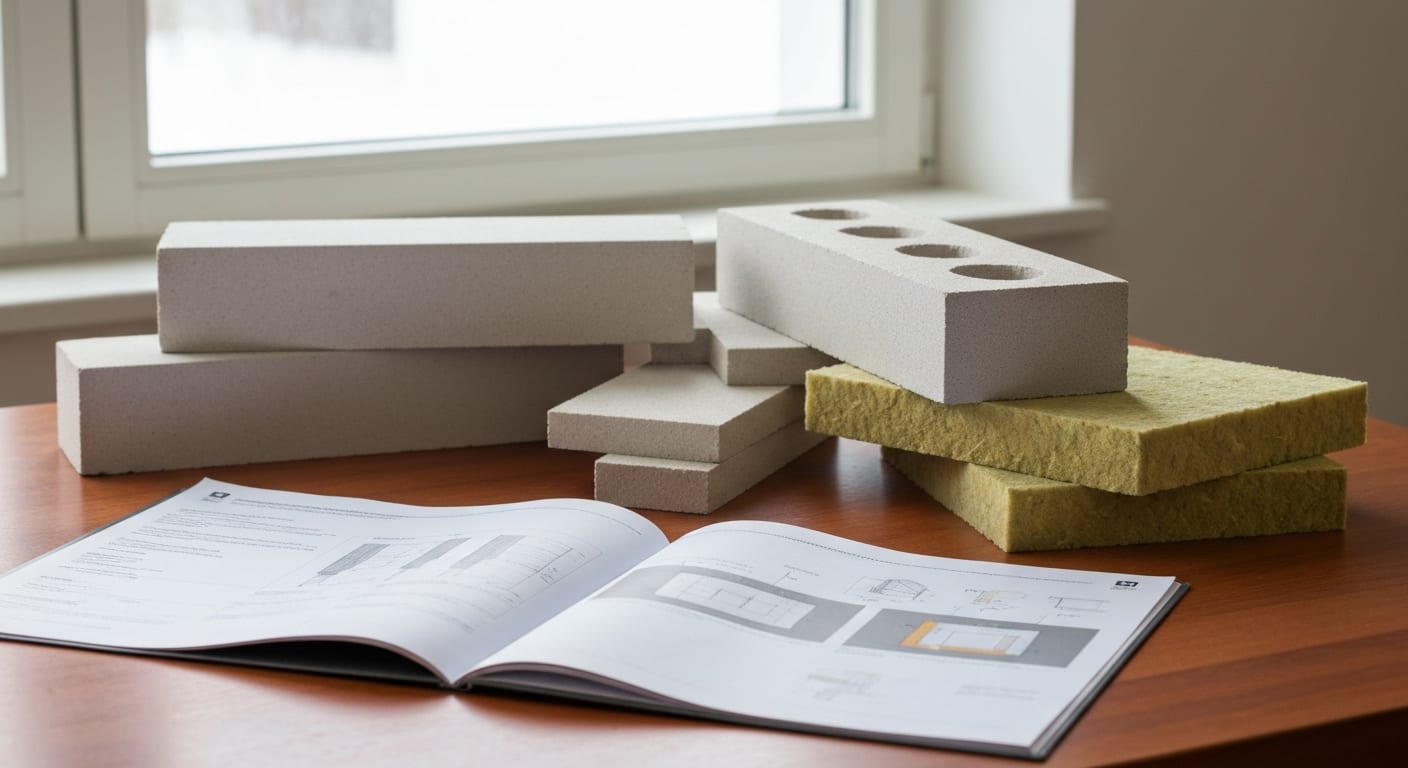
Construction is, on paper, the best-documented industry in Europe. Building materials carry Environmental Product Declarations verified by third parties against EN 15804 and ISO 14025. Manufacturers publish lifecycle data at a level of rigour most consumer sectors never approach. A cement or insulation producer can usually tell you the global warming potential of a declared unit of product to three significant figures.
The directive has applied since 27 September 2026. This article was written before that date: where it says 'before 27 September', read 'now'. Everything it tells you to check and fix still applies.
And building-materials websites still fail green-claims checks — often badly. Across the sites our engine has scored, the ones in construction and industrial manufacturing are not the strong performers you would expect from the documentation behind them. The reason is a mismatch that almost nobody in the sector has noticed: an EPD substantiates a number. It does not substantiate an adjective.
What an EPD actually proves
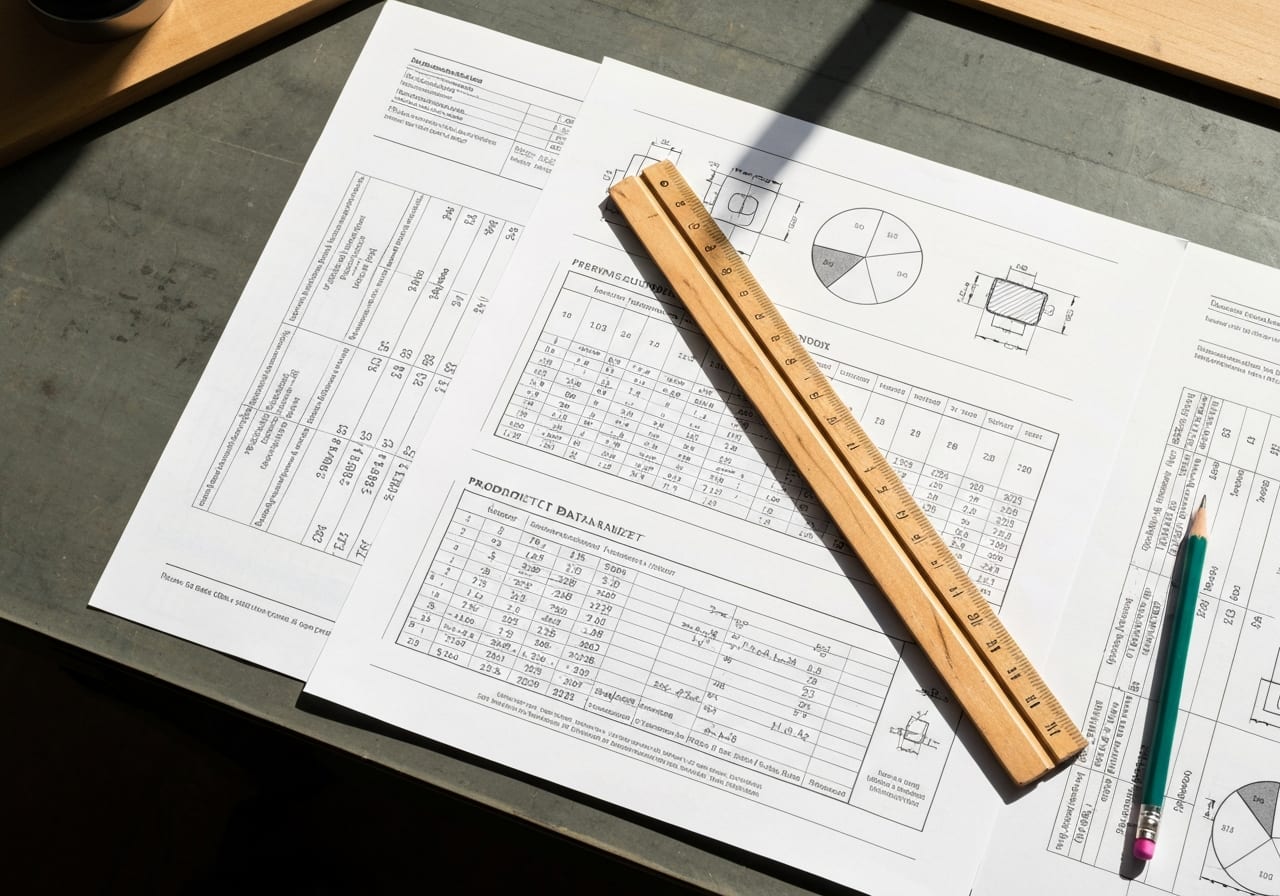
An EPD is a standardised, independently verified report of a product's environmental impacts across its lifecycle. It follows EN 15804 for construction products, sits under the ISO 14025 Type III framework, and is checked by a programme operator. It is a genuinely serious document, and producing one is real work.
But read what it is: a disclosure of measured impacts. It reports figures — kilograms of CO₂ equivalent per declared unit, water use, acidification potential. It does not say the product is good. It does not compare the product to alternatives. It does not certify environmental performance as excellent. A Type III declaration is explicitly designed to present data without judgement, so that the reader can make the comparison.
That is precisely where the compliance gap opens. Under Annex I of the amended Unfair Commercial Practices Directive, a generic environmental claim is prohibited unless the trader can demonstrate recognised excellent environmental performance relevant to the claim. An EPD demonstrates measured performance. It does not demonstrate excellent performance, because it makes no comparative judgement at all — that is the point of the standard.
Take any environmental phrase on your site and ask: does my EPD contain a number that proves this specific sentence? If the phrase is "38% lower embodied carbon than the 2019 baseline for this product", the answer is yes and you are on solid ground. If the phrase is "sustainable", "environmentally friendly" or "natural", there is no figure in any EPD that proves it, because it is not a measurable statement. That is the gap the directive targets.
Five claims that fail on building-materials sites
These are the patterns that recur across construction and industrial sites, in roughly the order we see them.
1. "Sustainable building materials"
The single most common finding across every sector we scan, and construction is no exception. It appears in page titles, navigation labels, article headings and product category names. As a standalone adjective with no defined referent it is a generic environmental claim under Annex I point 4a. The fix is not to delete the word but to attach it to something measurable: what is sustainable, compared with what, and by how much.
2. "Natural material"
Especially common for clay, timber, stone, lime and mineral wool. The problem is that "natural" implies environmental benefit without stating one — and in construction the implication is often doing real persuasive work, because it suggests low impact by origin rather than by measurement. Naturally occurring raw material and low environmental impact are different claims, and the directive treats the second as needing evidence.
3. "Climate-neutral" and "CO₂-neutral" products
This one is categorical. Where the claim rests on offsetting emissions rather than eliminating them, it is a per-se prohibited practice under Annex I point 4c — no substantiation rescues it, however credible the offset scheme. German case law arrived at a compatible position before the directive even applied: in BGH I ZR 98/23 the Federal Court of Justice held that an ambiguous "klimaneutral" claim requires clarification within the advertisement itself. For a sector that has leaned heavily on offset-backed neutrality for cement, concrete and insulation lines, this is the most expensive single phrase on the list.
4. "Made from recycled material"
Annex I point 4b prohibits an environmental claim about the entire product when it concerns only a certain aspect. In building materials the aspect is usually a percentage of recycled input in one component, or recycled content in the packaging rather than the product. Stating the share and what it applies to converts a prohibited claim into a compliant one, and costs you nothing but precision.
5. "Lasts for generations"
Durability is construction's favourite argument and its least evidenced one. Claims that a material lasts decades or centuries, that buildings using it remain sound after a hundred years, or that it outlasts alternatives, are comparative performance claims. Presented as fact without a study, standard or dataset behind them, they fall under the misleading-durability rule. We see this constantly in timber, masonry and mineral-material marketing, usually stated with complete confidence and no citation.
"We're B2B, so this doesn't apply to us"
This is the most expensive assumption in the sector, and it is half true — which is what makes it dangerous.
The true half: Directive 2024/825 amends the Unfair Commercial Practices Directive, which governs business-to-consumer practices. A manufacturer selling exclusively to distributors and contractors is not the primary subject of EmpCo itself.
The half that costs money: the exposure simply arrives through a different door. In Germany the UWG covers business-to-business advertising and allows competitors and trade associations to act directly through an Abmahnung, without waiting for any authority. The same klimaneutral case law applies to B2B advertising. Poland has a parallel route under the 1993 Act on combating unfair competition, where a competitor can demand cessation, a published statement, damages and disgorgement of profits. France and Italy have comparable regimes.
And there is a second door. Most "B2B" manufacturers publish a public sustainability section, product pages, and a news feed that anyone can read — including consumers. Content a consumer can read is consumer-facing content, which brings it back within EmpCo regardless of who signs the purchase order. In practice the question is rarely "are we B2B?" but "which of our pages could a consumer land on?" — and for most manufacturers the honest answer is nearly all of them.
A misleading environmental claim on a B2B manufacturer's site is still actionable. What differs is who acts: a competitor or trade association under national unfair-competition law, rather than a consumer authority under EmpCo. For many manufacturers that is worse rather than better, because a competitor has direct commercial motivation to act and does not have to prioritise cases the way a regulator does.
What the wider data shows
Across every site our engine has scored, the median lands at 59 out of 100 and around two-thirds carry at least one red-severity finding — the tier that maps to an outright prohibited practice. The distribution is polarised rather than centred: roughly a third of sites already score 80 or better, and roughly a third sit below 40. Very few are comfortably in the middle.
The single most common finding, on close to four in five sites, is the generic environmental claim with no specific proof. For construction that is worth sitting with, because it is exactly the claim an EPD feels like it should cover and does not. The live figures are published on our greenwashing statistics page.
A practical sequence
- Separate the prohibited from the unproven. Annex I claims — offsetting-based neutrality, generic adjectives, whole-product claims where only part qualifies — must be rewritten. Everything else needs evidence attached. Treating both the same way means rewriting things you could simply have substantiated. Start from the full banned and restricted terms list.
- Map each claim to a figure in your EPD. Where a number exists, use the number: it is more persuasive than the adjective and it is defensible. Where no number exists, the claim is not substantiated by the EPD no matter how good the EPD is.
- Audit the visuals, not only the text. Green colour fields, leaf motifs, forest photography and circular-economy diagrams all contribute to the overall impression, and the overall impression is what a court assesses. Claims printed inside images never appear in your HTML and are routinely missed.
- Check the specifier-facing pages you think are exempt. Technical documentation, sustainability sections and press releases are all publicly readable.
- Keep a dated record of what you checked and changed. In a competitor action the useful artefact is evidence of a documented review, not a recollection.
See how your product pages read against Annex I
The scanner crawls your public pages, flags each environmental claim with the rule and article behind it, reads claims printed inside images, and suggests a compliant rewrite for every finding. Free to run, no account needed.
Scan your site free →None of this means construction is worse than other sectors at environmental honesty. In many respects it is considerably better — the data exists, it is verified, and it is public. The problem is narrower and more fixable than it looks: the marketing language was written before the rules changed, and it reaches for adjectives when the underlying documents are full of numbers that would do the job better. Most of the exposure in this sector is solved not by claiming less, but by claiming more precisely.
Sources
- EcoClaim — Banned & Restricted Green Claims (full reference)
- Directive (EU) 2024/825 — Empowering Consumers for the Green Transition
- Directive 2005/29/EC — Unfair Commercial Practices, consolidated text (Annex I)
- ECO Platform — European EPD programme operators (EN 15804 framework)
- ISO 14025 — Environmental labels and declarations: Type III environmental declarations
- EcoClaim — Greenwashing Statistics 2026 (live benchmarks)
FAQ
Does an EPD make my environmental claims compliant under the EmpCo Directive?
Not on its own. An EPD is a Type III declaration under ISO 14025 and EN 15804 — a verified disclosure of measured lifecycle impacts. It substantiates specific figures, such as global warming potential per declared unit. It does not substantiate general adjectives like sustainable or environmentally friendly, because Annex I requires recognised excellent environmental performance for a generic claim, and an EPD deliberately makes no comparative judgement.
We only sell to distributors and contractors. Does EmpCo apply to us?
EmpCo amends the Unfair Commercial Practices Directive, which governs business-to-consumer practices, so a pure B2B supplier is not its primary subject. But the exposure arrives another way: national unfair-competition law such as the German UWG covers B2B advertising and lets competitors and trade associations act directly. Most manufacturers also publish sustainability and product pages that consumers can read, which brings that content back within EmpCo.
Can we still advertise a climate-neutral building product?
Not where the claim rests on offsetting emissions. That is a per-se prohibited practice under Annex I point 4c, and unlike most environmental claims no substantiation rescues it. German case law reached a compatible conclusion in BGH I ZR 98/23, requiring ambiguous klimaneutral claims to be clarified within the advertisement. Specific, measurable statements about actual emission reductions in your own production remain permissible where evidenced.
What is the most common problem on building-materials websites?
The generic environmental claim with no specific proof — sustainable, environmentally friendly, natural — used as a standalone adjective in headings, navigation and category names. It is the most common finding on close to four in five sites across all sectors we scan, and it is the one an EPD feels like it should cover but does not.
When does this start applying?
Directive 2024/825 applies from 27 September 2026. The transposition deadline for member states passed in March 2026, so national implementing rules are already in force in several countries. In jurisdictions with private enforcement, such as Germany and Poland, competitor action does not depend on the authority acting first.
Free account
Keep your compliance work in one place
Scans you run while signed out disappear when you close the tab.
- Save every scan and come back to it later
- See whether your score improves after you fix things
- Store certificates against the claims they prove